
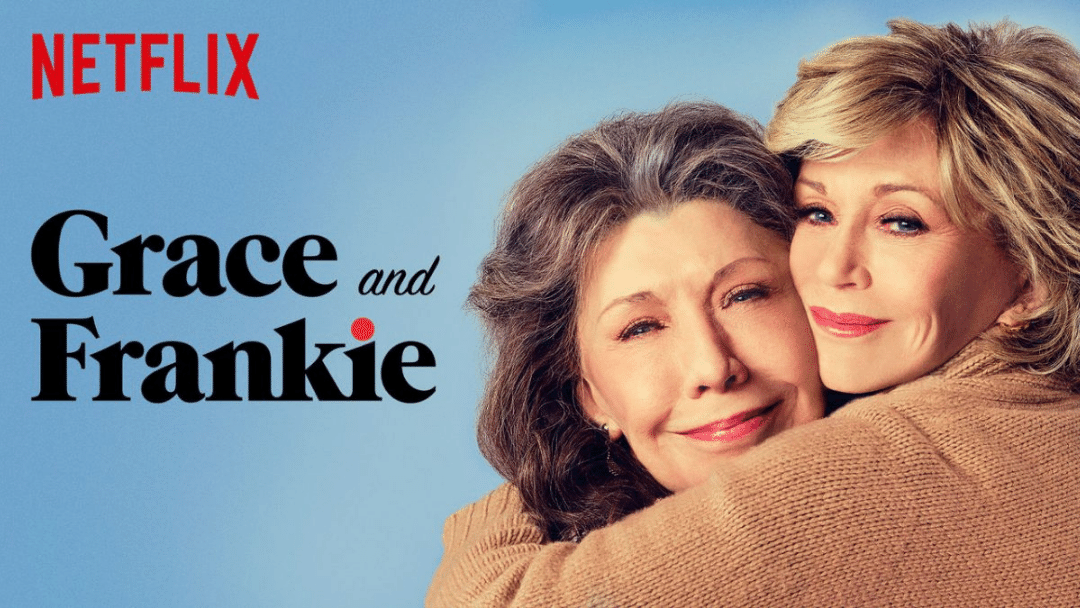
When you discovered that your husband was gay, it probably didn’t feel much like a ‘sitcom’! Unlike the Netflix hit series, Grace and Frankie, your problems couldn’t be fixed in 30-minute episodes, and you probably didn’t have much to laugh about! For that matter, you probably weren’t living in a gorgeous beach house, either.
Closeted mixed-orientation relationships aren’t usually talked about very much. We’re at an interesting time in history where homosexuality is no longer considered a criminal offence in most countries (it’s hard to believe it ever was!), although this is certainly not the case everywhere. For the most part, it is gradually becoming more accepted – sometimes even celebrated – yet there can still be shame and secrecy around the issue, leading some gay and lesbian people to hide their sexual orientation “in a closet”. Unfortunately, they sometimes take an unsuspecting straight partner into the closet with them. And when this happens, people usually say… nothing. Or unhelpful things!
For those who embrace homosexuality as a natural sexual orientation, it can be uncomfortable to think about a gay person doing a bad thing, and if these relationships are talked about, it’s usually from the perspective of celebrating the newfound authenticity of the coming-out partner. For those who aren’t quite sure what to think, it can be uncomfortable to talk about because it brings it into conscious awareness instead of keeping it swept under the carpet. For those who think sexual orientation is a choice, it can be uncomfortable to talk about because it seems so simple: just “choose to be straight”, stay in the marriage, and don’t make a fuss. (And to anyone who’s actually lived the reality of a closeted person, or was the partner of one, you know this last option is simply not as “easy” as it sounds!)
When the closeted partner does “come out”, the silencing of the straight partner’s experience has often been the norm. Then Grace and Frankie arrived on our screens and flung the door of the closet wide open and cast our eyes upon the straight wives! Instead of the issue being silenced, it’s suddenly the topic of the longest-running original sitcom on Netflix and it’s rated at up to 100% on Rotten Tomatoes.
What’s it all About, Anyway?
Grace and Frankie explores the lives of two older women who discover that their husbands have been in a secret homosexual relationship for 20 years. It quickly becomes obvious that the men are far more fond of each other than they are of their wives! (In case you haven’t seen it yet, here is the trailer for the final season.)
Blindsided by the discovery of their husband’s secret lives, the frenemies collide in an explosive, comedic spectacle that we just can’t get enough of. Happenstance draws the women together, but their differences drive them crazy! The interplay of the two contrasting characters is the catalyst for most of the humour and it’s an important point to note: the show does not make light of their suffering itself. There are certainly plenty of laughs, though!
Jane Fonda and Lily Tomlin absolutely steal the show. Their acting finesse and on-screen chemistry are undoubtedly a significant reason for the show’s popularity.
Grace (Jane Fonda) is all things proper and polished: a well-to-do, refined lady, who thought she was “happy enough” in her long marriage until the day she discovered she really wasn’t. As her life crumbles around her, her polished veneer is erased by the improperness of her husband’s scandalous affair, and Grace is understandably outraged.
Grace’s accomplice in her recovery journey is the altogether quirky, free-spirited, artistic, non-conformist Frankie (Lily Tomlin), who is the polar opposite of Grace in oh so many ways. Frankie had enjoyed an endearing, soulful connection with her husband and is utterly heartbroken by his betrayal.
The juxtaposition of Grace’s properness and outrage, with Frankie’s realness and heartbreak, creates a rich, intriguing platform for the exploration of numerous themes. In addition to the major plot point of discovering your husband is gay and in love with your friend’s husband, the show also addresses issues such as:
- Secrets, lies and deception
- Mismatched marriages
- Betrayal trauma
- Identity betrayal
- Dating after betrayal
- Grief and loss
- Family dysfunction
- “Coming out” later in life
- Frenemies and friendship
- Women and ageing
- Divorce in later life
- Older women and sexuality
- Female entrepreneurs (see previous!)
- Women, ageing and career
- Ageing and beauty
- Retirement and empty nests
- Resilience and post-traumatic growth
So, as a straight spouse, you’ve possibly already watched Grace and Frankie and formed your own opinion about whether it’s your thing or not. Or perhaps you’ve held off, uncertain whether to watch it or not. The reality is, when art imitates life, it can feel a little close to home, which can be good… or not so good at all.
What’s Good About the Show?
An Important Message
Ultimately, Grace and Frankie highlights the plight of straight wives who’ve discovered that their husbands are gay, giving much-needed insight into some of the challenges faced by women coming to terms with their unwanted reality, attempting to heal and rebuild their lives. The male version of this experience was touched on in Friends, when Ross discovered that his wife was a lesbian and it’s no surprise that Marta Kauffman is a producer on both shows.
Grace and Frankie takes a light-hearted, yet poignant, look at a deeply painful situation, taking viewers inside the experience and hopefully leading to increased awareness, validation and empathy.
The comedy element is partly what makes the series so accessible and engaging, which helps get the message out to more people, raising awareness of the impact these closeted mixed-orientation relationships can have.
Brilliant Characters & Actresses
One of the things I absolutely love about this TV series is that Grace and Frankie are centralised in the storyline. (I guess it’s to be expected, since the show is named after them!) Although their husbands’ secret homosexual affair is the catalyst for the series, the spotlight is rightfully on the experience of the straight wives.
Jane Fonda and Lily Tomlin capture the nuances of their characters brilliantly, and together they’re unstoppable in their capacity to play off each other with comedic excellence. Their characters, Grace and Frankie, are so different (an understatement, to say the least!). The intersection of Frankie’s quirky eccentricity and Grace’s uptight ‘properness’ is comedic gold! Two very different friends, united in a shared tragedy, discover a bond that transcends it all.
Harm is Acknowledged
I have a lot of respect for the fact that the husbands’ secret homosexuality is not used as the comedy focus; in fact, Robert and Sol are relegated to the storyline backdrop, for the most part, and are presented with a certain gravitas that leaves them coming off as somewhat unlikeable (and yes, I may be a little biased). As the author of Screen Rant points out, “They hurt a lot of people, including themselves, with their actions and personality flaws that both refuse to work on.”
One particularly poignant scene portrays a discussion between the two ex-husbands after one of them revealed the truth to a new group of gay friends.
Robert: “I feel shitty about all the years I pretended I wasn’t gay and what that did to all the people that I love. And now (my gay friends) know that that’s the kind of coward that I am!”
Sol: “But that’s what happened and we can’t pretend it didn’t!”
Robert: “I know we can’t, but do you have to discuss it with the whole world?”
Sol: “No, but we shouldn’t hide it either! Personally, I’m done with being in any kind of closet.”
(Season 3, Episode 4)
While this doesn’t quite qualify as an apology, it is an acknowledgement of sorts that harm was done
Humour & Heartache
Humour and sadness are both totally normal in grief. In fact, laughter can help you heal. You are almost certainly well acquainted with grief, sadness and despair, but it can also be helpful to make space for laughter.
Laughing in the face of your grief does not mean that what happened didn’t matter, or that it wasn’t wrong. It also doesn’t mean you’re “okay now”. But at that moment, for one brief moment, you are transported to a place that is lighter and happier.
Humour can be a welcome relief from the intensity of grief. It can help you switch off for a while. It releases tension and helps you cope, reminding you that even when facing the most difficult of times, that version of yourself that can laugh and enjoy life is still within you. The increase in dopamine and endorphins when laughing can take your grief work to new and deeper places as it cracks open the pain and softens your defences.
Laughter is a door that creates a crack in our rational mind and allows insights to enter in ~ Mark Liebeno
Humour can help you face your pain directly. It creates a safe space to address difficult subjects and provides a new perspective on painful experiences (Rayle, 2013). In his article at Huffpost, Mark Liebenow highlights a sacred practice of Native Americans, who “use humour to prepare the way for the sacred, telling jokes… to loosen people up, break them out of their thinking minds, and prepare them to intuitively receive the sacred wisdom”.
With a show like Grace and Frankie, the humour is linked to your painful experience as a straight spouse. It is not so much relief from grief but a cathartic trigger to access the grief directly. More than just laughing in spite of suffering, laughter about the very cause of suffering itself can bring us close to the pain and allow us to experience it differently, helping to loosen some of its gravitas.
Another example is The Tutu Project™ in which a photographer took photographs of himself in a pink tutu for his wife who had been diagnosed with breast cancer. “Oddly enough, her cancer has taught us that life is good, dealing with it can be hard, and sometimes the very best thing – no, the only thing – we can do to face another day is to laugh at ourselves, and to share a laugh with others” (Carey)
A “feel good” dramedy like Grace and Frankie shows us that we can feel good and feel sad, simultaneously!
By bringing laughter and pain together, you’re not only able to laugh in the face of grief but directly reduce your distress levels while increasing your feel-good hormones simultaneously. Voluntarily walking toward a painful topic, and having a laugh while doing so, can help to increase your capacity for distress tolerance, making space for new perspectives and holding your pain more lightly.
Instead of laughing in spite of the pain, you can laugh AT the pain and find some healing in the process. When pain and humour collide, we have an opportunity to face difficulties while retaining our sense of humanity. After all, life is not a bed of roses, but it’s not a bed of thorns, either. Both can co-exist
What’s Difficult About the Show for Straight Spouses?
The reality of discovering your husband is gay is definitely not as funny as a TV sitcom! You may feel that the show minimises or invalidates your experience and you may be offended to see your pain played out in a TV comedy. Although the series does touch on some of the painful elements of the experience, the nature of 30-minute episodes may leave you feeling as though it glosses over the pain. It is undoubtedly true that the complex nuances of the straight spouse experience cannot possibly be summed up in a series like Grace and Frankie.
It can’t be denied that a show like Grace and Frankie can be quite triggering when it’s so close to your experience. Let’s face it: you’re going to see two men kiss each other and be affectionate (these scenes are not particularly intimate or intense, but might be quite triggering nonetheless, given what you’ve been through). Also, it’s not just two random men but the ex-husbands of the straight spouses in the show.
You will see their relationship progress and watch the family adapt. You will likely find this confronting. I was relieved that they only show limited physical affection between the two ex-husbands, but there are a few kisses and the relationship itself can be difficult to watch. This is likely to be the most difficult aspect of watching the show for you.
Your financial situation may literally be the poor cousin of what is depicted on the show, so you might find that it misses the mark in terms of exploring the reality you’re living. A series like Maid, on the other hand, explores the grim reality of a single mother’s financial struggle after leaving a toxic relationship.
In short:
- Occasional PDAs by the ex-husbands (I found that closing one’s eyes helps a lot!)
- You will be witness to the ongoing relationship of the two gay men
- You may find yourself coveting a gorgeous beach house by the seaside and bemoaning your more frugal existence
- Turning your pain into a sitcom may be upsetting
- Humour can be a grief trigger
So, should I watch it?
You probably knew I’d say this: it depends.
If you are still in a raw, fragile state after discovering (or suspecting) your husband is gay, Grace and Frankie may be difficult to watch. On the other hand, many straight spouses find it cathartic to watch. And incredibly validating. It may be the catalyst for some conversations with family and friends that have been difficult to have.
If you think it’s too soon, or just not your thing, I hope this post has helped you get clarity around that. This show is definitely not “required watching” and may be either unhelpful or too painful for some straight partners to watch.
What do you think?
What about you? Have you watched it? Was it helpful or painful? Or both? I’d love to hear your thoughts in the comment section below!



I’ve not watched this series (we don’t have Netflix). As a straight man married to a lesbian, I’m deeply aware that we (straight men who stay with their lesbian wives) are a tiny minority of a minority. So tiny that we’re mostly invisible. I know that my wife loves me, but I also know that she does not and cannot desire me.
A great summary. I found it cathartic and healing – the first season started 6 or so months after my ex came out. I watched from series one in that year (2015) – though occasionally with many tears – as I saw aspects of my life play out. As the seasons progressed both Grace & Frankie healed as did I. Will miss the series.
Ironically, my ex and I were almost done with the first season when he disclosed his homosexuality. I stopped watching for a while, it was too close to home and I didn’t have the emotional capacity for it. I have since watched more episodes and I’m looking forward to binging the newest season soon. It does help to see parts of my reality portrayed on screen, makes it feel like I’m not abnormal, which is how I felt for some time post disclosure.
You raise another interesting point: the validation of not being “abnormal”. I’m glad it did that for you! Also, another unexpected outcome: it seems that it helps some closeted partners finally tell the truth. I wonder how many other times this has happened?