

Here in Australia, yesterday was R U OK Day. R U OK is a suicide prevention charity that encourages people to connect with others and have meaningful conversations to help them through difficult times. The main event is an annual day where people are encouraged to ask others, R U OK? This year, the theme was, “Ask R U OK? Any Day” because life happens every day! And sometimes life is tough. As someone who had the rug ripped out from underneath you when you discovered your partner’s hidden homosexuality or gender identity, you know how meaningful and potentially life-saving it is to have others ask, “R U OK? How can I help you? I care about you.”
Like many straight spouses, you may find that people ask after your formerly closeted partner/ex-partner, but fail to ask how you are. While there may be a higher proportion of LGBT people who suffer with mental health challenges, there is no equivalent data for the partners of those who hide inside ‘straight-passing marriages’. We are the closeted of the closeted. Unseen, Unheard. An invisible statistic.
People often talk about – and care about (rightly so) – the suffering of closeted men and women who don’t feel safe enough to “come out of the closet”. It must be incredibly difficult to hide in shame, worrying about the possible impact of people discovering the truth. No one should be vilified for being gay or transgender. BUT (and it’s a big but), marrying a straight partner without first disclosing their sexual orientation or gender identity, is not okay.
Everyone has a right to know the truth before developing an intimate relationship, and especially before entering a legal marriage or de facto relationship. You had a right to know.
Why you may not be OK – yet…
Research by Keffer and Skinner in 2016 showed us that 76% of betrayal trauma victims experience post-traumatic stress disorder (PTSD). Earlier research by Steffens in 2005 found a similar rate of 70%, with more than half of those experiencing moderate-severe symptoms. This is serious stuff!
My personal belief is that the rate may be even higher for straight spouse betrayal trauma, because it is more than betrayal. The relationship itself was fraudulent from the beginning, built on a foundation of deceptive sexuality. This is a form of intimate partner relational abuse which can result in significant mental and physical health problems, along with economic difficulties and traumatic grief. It affects your thinking, emotions, relationship to self and others, identity, and your sense of meaning. Finding yourself in a closeted mixed-orientation marriage is an existential and relational crisis.
So, if you’re wondering why things often feel difficult, why your recovery is slow, and why you may sometimes doubt if you’ll recover at all, please know that the struggle is real and your feelings are valid. And they won’t last forever.
How to be more OK
It’s normal to struggle with the effects of relational trauma and sexual deception in the early days, and the difficulties may continue for many years. But there is hope (read on). Here are some areas of life in which you might be struggling, and some ideas to help you cope.
Emotional
- Therapy helps! Regular sessions with a therapist who understands the complexities of straight spouse betrayal can help you make sense of things and process your emotions. My books are currently full, but I can offer single sessions for now if you need help sooner. I am considering starting groups, so I can help more people. Make sure you’re on my email list to stay informed of future offers.
- Journaling: Keeping a journal can help you express your feelings and thoughts, even the “ugly, negative” ones! Do ensure no one can easily find it (i.e. your partner/ex and any children). .
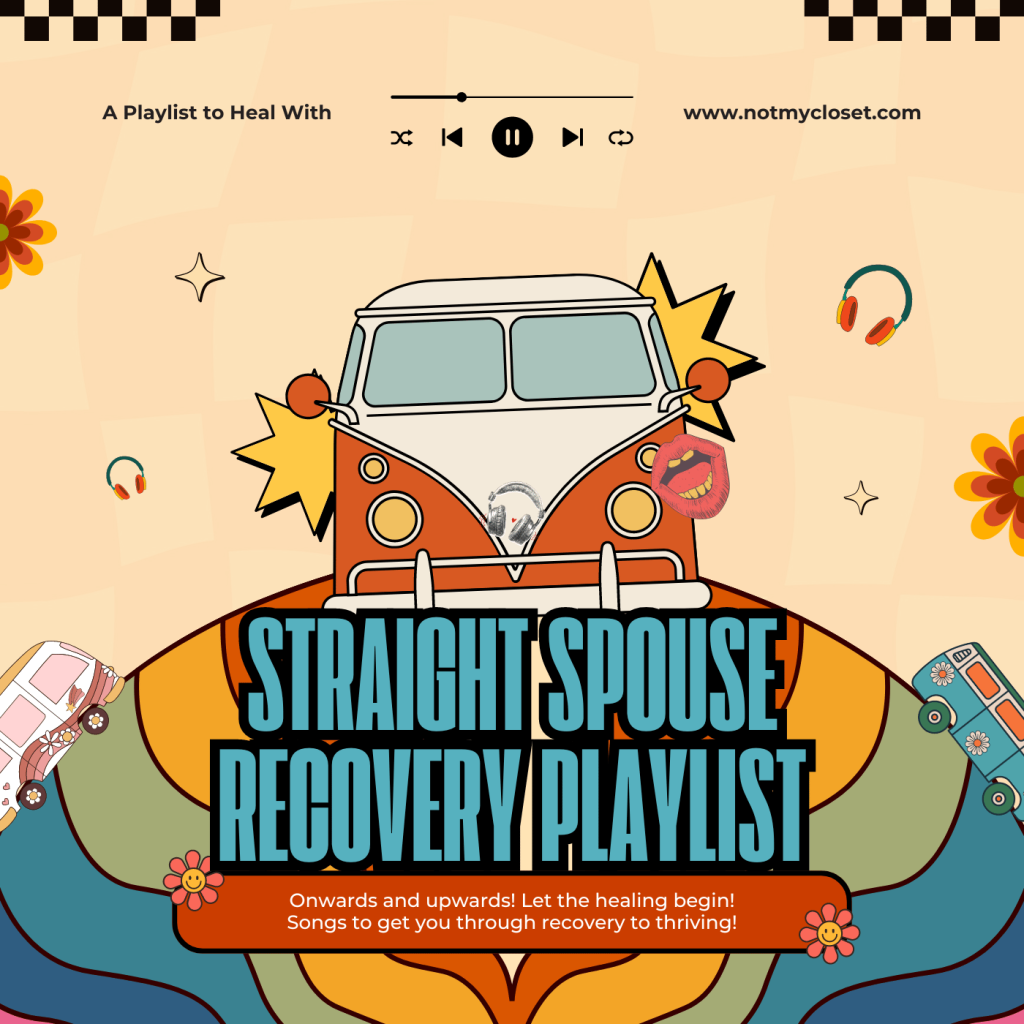
- Creative Outlets: Creative activities such as painting, writing, or music, can provide an emotional outlet and help you express the unconscious feelings that can be difficult to express. Photo-therapy can also be cathartic, although it may help to do this with therapeutic support. And what about music? It can be so healing, restorative and cathartic. You might like to check out my 12-hour straight spouse playlist!
- Mindfulness Practices: Techniques such as meditation, conscious breathing, and mindfulness can help manage anxiety and emotional stress.
Relational
- Social connection is important, even if it’s just one or two people.
- Support Networks: Where possible, strengthen relationships with friends and family who provide positive support and understanding.
- Social Activities: If you can manage it, you might like to join social groups or activities that interest you to foster connections with others and reduce feelings of isolation.
- Rebuilding Trust: This is a big one and a major goal to work towards. You might find it helpful to start by taking tiny steps towards building trust in relationships by setting clear boundaries and communicating openly. This problem is not simply solved with one sentence in a blog post. If you need professional help, please reach out.
Spiritual
- Spiritual Community: Some people find it helpful to connect with a supportive spiritual community that is understanding of your journey.
- Spiritual Practices: Engage in spiritual practices that resonate with your beliefs, such as prayer, meditation, or even just lighting a candle and engaging in meditation.
- Reading and Reflection: Explore spiritual literature, poetry, or guided reflections that can provide comfort and insight. One of my favourite poets is Donna Ashworth – you might like her book, Wild Hope.
- Nature Connection: Spending time in nature fosters a sense of peace and spiritual connection to the world around you.
Physical
- Routine Health + STD Checks: Maintain regular check-ups with a healthcare provider to monitor and manage physical health effectively. It’s especially important to have a full screening for sexually transmitted diseases, and if you’re a female straight spouse to mention that your partner has possibly been sexually active with men. monitor and manage physical health effectively. It’s especially important to have a full screening for sexually transmitted diseases, and if you’re a female straight spouse to mention that your partner has possibly been sexually active with men.
- Exercise: How do you like to move your body? Do you prefer yoga, walking, dance, swimming, gym workouts, or…? Moving your body in a way that you enjoy can help reduce stress and improve your overall health.
- Nutrition: What’s your relationship like with food? Do you enjoy eating delicious, nutritious food? Or perhaps you’re off your food at the moment, or struggling not to comfort eat to soothe your feelings. When life is really difficult, you may find it helpful to buy some meal kits, or stick to simple meals with minimal preparation.
- Rest: This can be so difficult when you’re feeling hypervigilant and stressed. People say to prioritise getting enough sleep and rest, as stress can often disrupt sleep patterns, but it can be easier said than done. If you’re having trouble sleeping, you may like to discuss options with your doctor or natural health care provider. Try to practise good sleep hygiene (why is it called that, I wonder?). Many straight spouses change their bedroom aesthetics to create a private healing oasis for rest and recuperation. It may have been a symbol of pain and rejection before, but it is now yours to create a space that is just right for you (assuming your partner is out of the bed!)
Wherever you’re at in your healing journey, whether your discovery is recent or a while ago, you deserve to access help and support when you need it. You may like to sign up for my emails below, to stay in touch with future posts, tips, and offers.
References:
Keffer and Skinner in (2016) using (TIPSA V 2.0 Skinner, Knowlton, Manning, Jefferson): Intimate Deception: Healing the Wounds of Sexual Betrayal, pp. 312-313
Steffens, B. A. (2005). The effects of disclosure on wives of sexual addicts. ProQuest Dissertations & Theses.




Brilliant..absolutely spot on Brilliant..thank you Karen.